The appeal of life as a chef on campus felt to Melissa Zarrella like a revelation after years in hotels and catering. “Once you get into universities, you never leave,” says Zarrella, who is senior executive chef with Aramark at the University of Hartford (UHart) in Connecticut. “You can be fun and creative because students love innovative foods.”
In addition to that, working for Aramark Collegiate Hospitality for the past seven years at UHart has meant connections to groups like ProChef, Women’s Foodservice Forum and the American Culinary Federation. And from a farm-to-fork standpoint, connections to local farms and businesses has meant a flagship farmers market project for Zarrella and the UHart dining team.
The market began about six years ago, Zarrella says, and has been growing steadily ever since from a foundation of a few scratch items, local produce and some local coffee and sauces. As it’s grown, it’s become part of a bigger picture in which the whole UHart community is learning about gut health through a natural lens of sourdough starters, pickled items, cold-pressed juices and more, bringing this relatively new-to-the-general-public piece of the wellness puzzle to the forefront.
“Most people do not realize that gut health is fundamental to your overall wellbeing,” Zarrella says. “It’s the balance and function of the digestive system, but that function influences your immunity, mental clarity and energy levels. Gut health starts with your gut microbiome and what you feed it.”
So, how do you know if your gut health could be lacking?
“When your gut health is out of whack, it affects your whole body,” Zarrella says. “Digestive issues are the biggest red flag for gut health. Bloating, stomach pains, constipation… but it goes beyond the obvious stomach issues. Some people experience skin issues, like rashes and acne. Fatigue and low energy, feeling brain fog… food cravings, especially for sugary foods, food intolerances. Disturbed sleep patterns: Many people don’t realize that gut imbalances directly affect the hormones that regulate sleep. There are also studies connecting gut health to mental health. An imbalance can cause stress and anxiety, influencing mood and emotions.”
The benefits of this kind of wellbeing obviously appeals to students, faculty and staff in their busy, sometimes-stressful lives, she adds. “Can you imagine all of that [imbalance] being lifted off a person’s shoulders? Everything just falls into place and you become a well-oiled machine. Your mood is lifted, you have energy, no stomach issues and you feel well, overall.”

UHart’s original starter is named Betty Wheat. These jars are some of her “kids.” They can be used for student to try their hand at the craze of sourdough from scratch. | Photo courtesy of Aramark
The Farmers Market, run by Zarrella, Executive Sous Chef Edward Flores, Sous Chef David Mejia and Pastry Chef Vanessa Rivera, is set up right in the middle of the conference center green, a crossroads of the campus. “This area bridges the academic and residential sides of campus,” Zarrella says, “so you capture students, faculty and staff crossing from one side to another.” Anyone is welcome to check out the farmers market, and cash, credit cards and dining dollars are accepted, giving students a pretty neat option that can be part of their dining plan.
“We’ve grown so much. We still focus on local produce, although we do fill in with other options, especially in spring when local produce is hard to come by in Connecticut,” she says. “Supporting local businesses and filling in with scratch items are always the finishing touches on a farmers market.”
The scratch items — from mini seasonal quick breads to apple fritters to jumbo cookies to seasonal dessert bars and more — are made by the UHart dining team, then packaged mostly in fiber pulp containers and reusable mason jars, keeping sustainability in mind always. Last year, reusable totes were added to the mix.
And the UHart bakers have come up with an answer to the popular Crumbl cookies, Cookie Patch, their own brand which recently debuted. But it’s the sourdough (both bread and starter), along with pickles, that make the market a place where gut health is truly celebrated through education and eating.
What fermentation and cold-pressed juice can do to fuel you
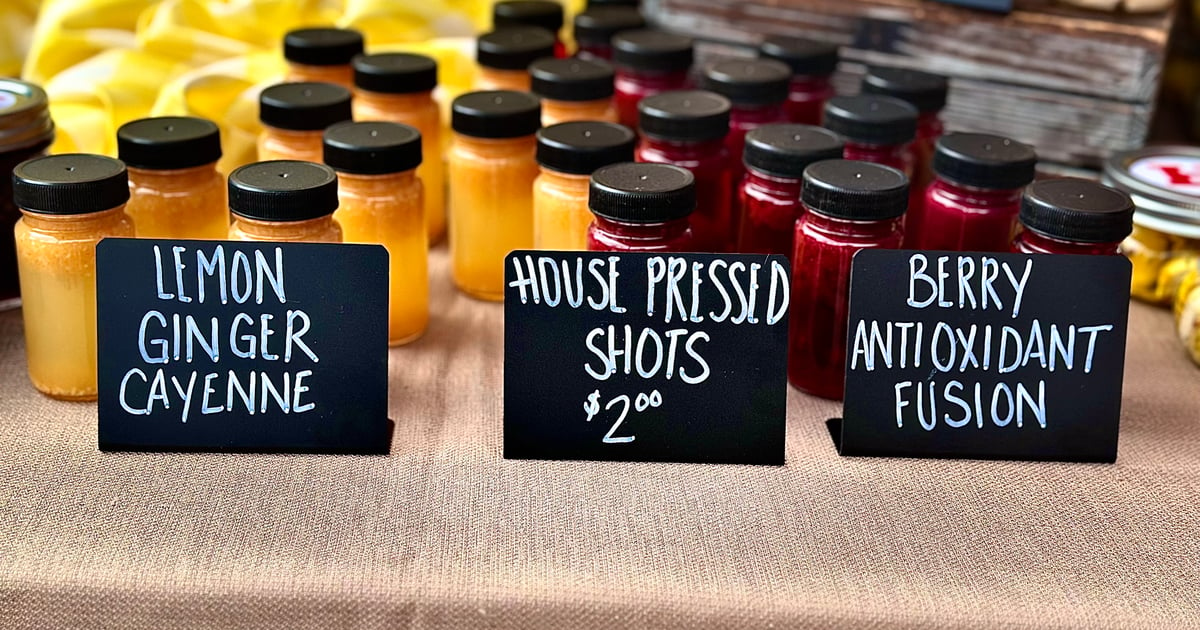
Bubbling batches of sourdough starter you can take home; gorgeous sourdough loaves made fluffy with those same bubbles; mason jars stuffed with pickled veggies that make you pucker; shots of cold-pressed fruit with the zip of ginger and cayenne: these are some real-deal gut health legends.
“In terms of fermented foods for health, the pickles add an additional layer of probiotics, which benefit gut health, and they’re a great source of nutrients and antioxidants,” Zarrella says. “In sourdough breads and starters, the fermentation process helps reduce blood sugar spikes, compared to eating non-fermented wheat products, and may help degrade the gluten protein in wheat, making it easier to digest for those with gluten sensitivity. They’re higher in pre- and probiotics, and the fermentation process also reduces phytic acid, a compound in grains that can hinder nutrient absorption. The lactic acid produced in fermentation acts as a natural preservative, which can help maintains a bread’s freshness for up to five days, and it reduces the need for artificial additives that might affect digestion.”
As for cold pressed juices, there’s a lot more to it than just being cold. “They’re made with a different type of juicer. They operate at a lower speed, pressing instead of the traditional spinning blade. This creates less heat, which creates less oxidation, preserving the vitamins, minerals and enzymes that are naturally destroyed in the traditional juicing process.”
Since commercial cold-pressed juicers are quite expensive, the UHart team has only been making small batches with a home cold presser, but bigger plans are in the works, a possibility for the Kitchen 101 series, a pop-up teaching kitchen for students in the resident dining hall. For now, “we always juice the morning of the Farmers Market to sell the freshest possible product,” Zarrella says. “Juices are a simple way to increase the intake of essential vitamins and minerals, including vitamins A, C, iron, polyphenols and enzymes. You can juice many different types of fruits and vegetables, depending on what you’re trying to achieve.”
Some of Zarrella’s go-to juice components include apple cider vinegar to help absorb nutrients, high-fiber veggies like carrots, high-water fruits like watermelon, herbs, seeds, ginger, cayenne, chia and basil.
“Cayenne and ginger are two of my favorites to add in for gut health,” she says. “Ginger may help reduce inflammation, while cayenne may help support digestion in some people.”
Since all this talk of digestion may not be everyone’s cup of tea, Zarrella has found graceful ways to read the room and still talk about gut health. “When speaking with guests, I often tend to focus on overall health and wellbeing,” she says. “It sounds silly, but I compare people to cars. If you put water in the gas tank, it’s not going to run properly. Same with people. When you fuel yourself with well-balanced, nutrient dense foods, you run properly; you feel better; your energy levels boost; you have mental clarity. Sometimes using a term like ‘gut health’ can be less than appealing, but people understand the importance of overall wellbeing. It’s just a matter of explaining how the way we fuel our bodies directly correlates to that wellbeing.”
link