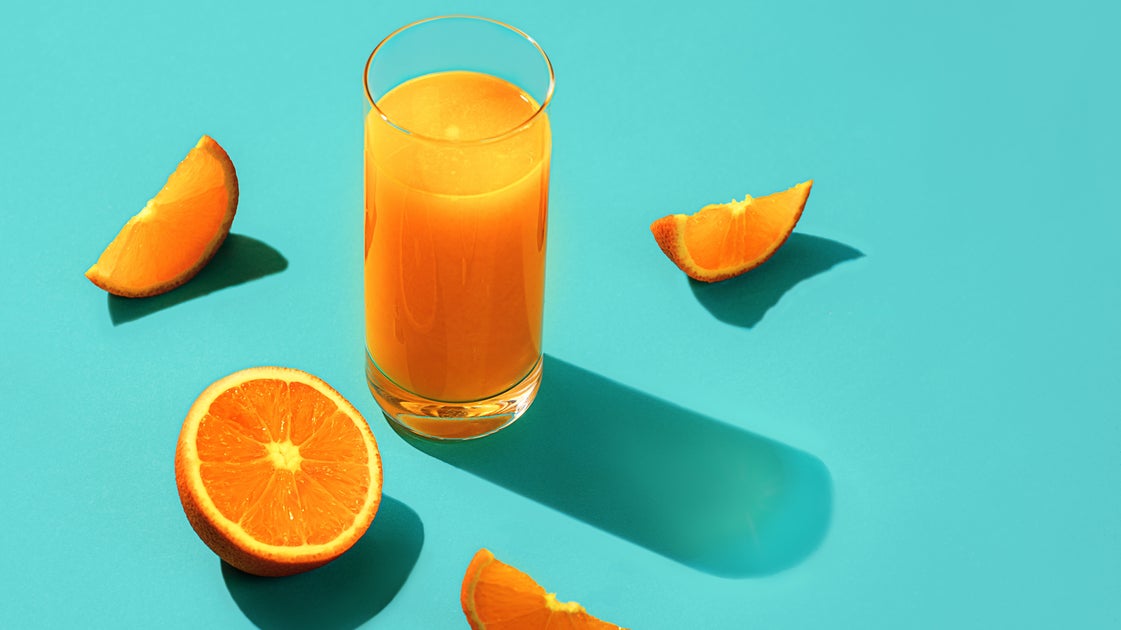

Fruit juice is likely one of the most overrated beverages. Many people still believe they are doing something good for their health by drinking a glass of fruit juice at breakfast or in between meals. However, the opposite seems to be true. A recent study shows that juice can have a negative impact on the immune system.
Our misconception is simple: It is known that fruits are healthy due to their vitamins, bioactive substances, and fiber. Therefore, we assume that juices and smoothies, which contain a high amount of fruit, are even healthier. However, juices and smoothies contain a lot of sugar, especially fructose. During the production process, vitamins and fiber are often lost. Researchers at the University of Vienna have now proven that fructose, which is present in high amounts in juices, soft drinks, and other products, negatively affects the immune system. Even more surprising is that just one glass of juice is enough to impair the immune system.
What Did the Researchers Investigate?
Metabolic diseases like type 2 diabetes are associated with higher infection rates, longer and more complicated infection courses, and higher mortality rates. However, the influence of diet and certain nutrients, such as free fructose, is not yet fully understood. A research team from the University of Vienna conducted a nutritional study with healthy individuals to examine the effects of fructose intake through food on the immune response.1
To find this out, 36 healthy participants aged between 20 and 40 were recruited. The participants’ weight was within the normal range, they consumed little alcohol, and were non-smokers. Two sub-experiments were then conducted.
-
Sub-experiment 1: For three days, participants were given a diet where 25 percent of the calories came from fructose. This amounts to about 120 to 150 grams of fructose per day.
-
Sub-experiment 2: Participants had to consume a drink containing 110 grams of fructose within an hour. This amount is found in a liter of apple juice and in a soft drink like cola.
According to the researchers, these are the amounts of fructose that many people consume daily. Especially those who regularly consume soft drinks, energy drinks, or sweets quickly reach these amounts. What many forget is that fructose is not only found in fruit juices. It is also industrially produced and used as a sweetener in soft drinks and energy drinks, yogurts, sweets, and ready meals. It often hides behind terms like “corn syrup,” “glucose-fructose syrup,” or “fruit sweetness.”
What the Blood Samples Revealed
To examine the effects of high fructose consumption on immune cells, researchers took blood samples before and after fructose intake to compare the values. They paid special attention to monocytes, which are immune cells that identify and combat pathogens. The researchers found that monocytes reacted more sensitively to bacterial stimuli after fructose consumption. Within just a few hours, the release of pro-inflammatory substances like interleukin-6, interleukin-1β, and tumor necrosis factor-α increased two- to fivefold. According to the researchers, this shows that even short-term fructose consumption can enhance the immune response and promote inflammation.
Why Does Fructose Impair the Immune System?
The big question now is: Why does fructose negatively affect the immune system? The Austrian researchers were able to clarify this question in their study. In laboratory tests, they found that fructose activates certain switches, like TLR2, in monocytes. TLR2 recognizes pathogens and triggers the immune response. However, if TLR is activated too strongly or too frequently, it leads to an impairment of the immune system. This can cause inflammation even when the body is not actually infected.
Additionally, it was found that fructose disrupts the energy balance of the cells. Shortly after consumption, energy reserves drop significantly. This activates another “switch” called SP1, which further drives the formation of the inflammation receptor. To test the direct influence, researchers blocked SP1 in an experiment. The immune response then calmed down again. This demonstrated that fructose sets off a chain reaction that negatively affects the immune system.
Even in the human intestine, researchers were able to demonstrate the negative impact of fructose. Fructose consumption caused the formation of GLUT5 transporters, which absorb sugar, to skyrocket within 14 hours. The immune cells below the intestinal wall reacted more strongly to bacterial stimuli.
Conclusion: Better to Eat Fruit Than Drink Juice
In the study evaluation, the researchers point out that even small amounts of fructose cause measurable changes in immune cells. For example, just one glass of juice (200 to 250 milliliters) with about 13 to 16 grams of fructose can impair the immune system. Previous studies also show that high (fruit) sugar consumption can lead to fatty liver. Thus, the advice is clear: It’s better to eat fruit than drink juices. A good alternative is always water and unsweetened teas. For a quick energy boost, black coffee, which is said to have health-promoting effects, can be consumed.
The researchers emphasize that further studies are needed to understand the mechanisms behind the influence of fructose on the immune system in detail. This is particularly important in the context of sick people with metabolic disorders, as fructose consumption could hinder healing success.
The post Even a Glass of Juice Can Impair the Immune System, Study Finds appeared first on FITBOOK.
link